Spanish

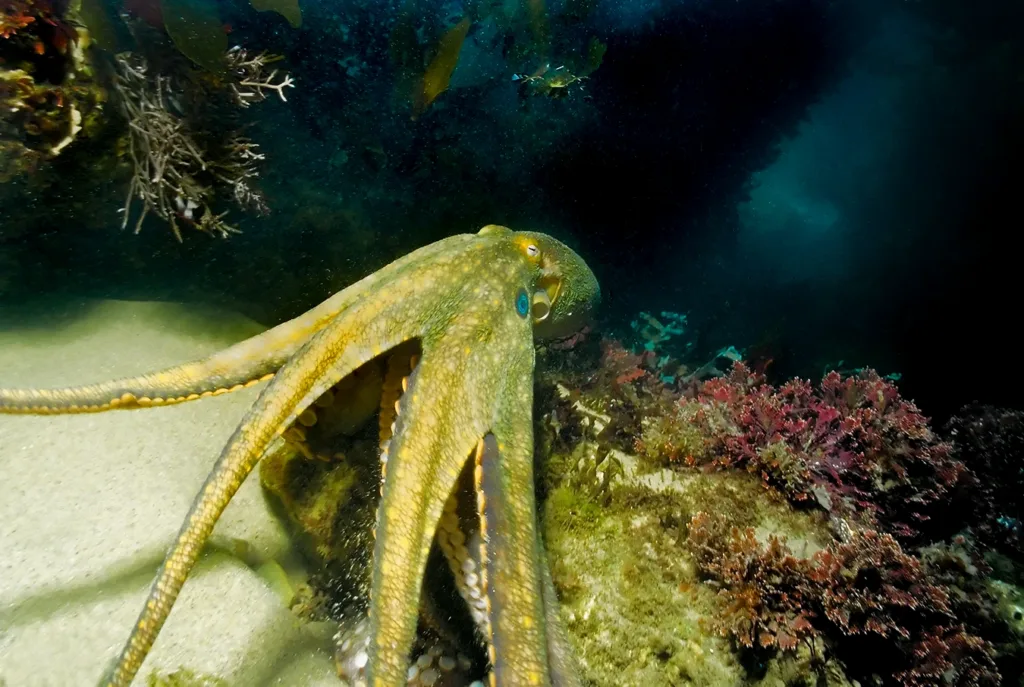
California has one of the most amazing coastlines in the world. Stretching more than 800 miles along the Pacific Ocean, California’s coast is home to many different habitats. A habitat is a natural environment where plants and animals have everything they need to live a happy life, including food, water, shelter, and space.
In this guide to California ocean habitats for kids, we explore different marine environments and the amazing creatures that call them home.
Jump ahead to learn about California’s:
Take a Peek at New Exhibits Coming Soon!
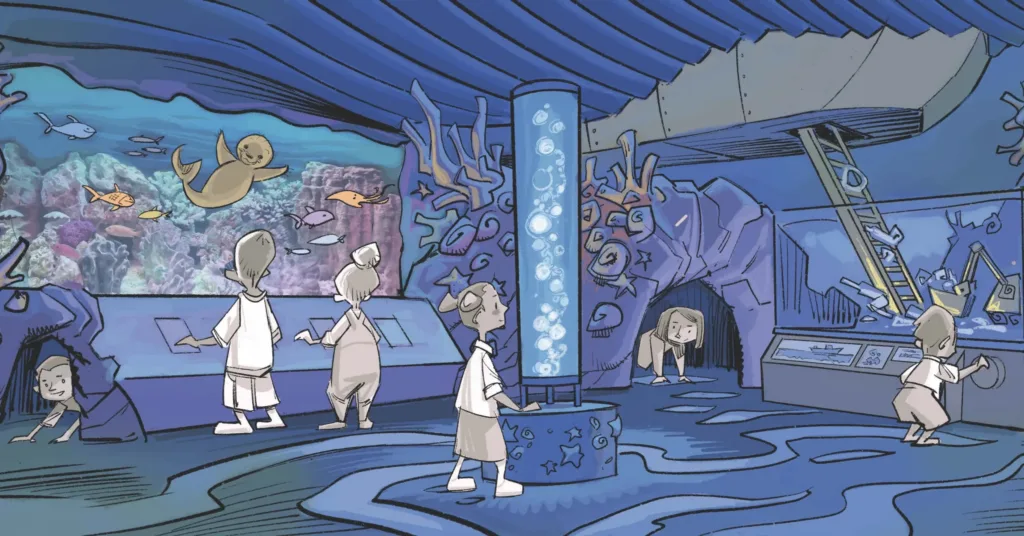
The Children’s Museum is currently raising funds for a huge expansion project. Among the new exhibits we have planned is Aquatica! This interactive space will be dedicated to exploring the breathtaking world of ocean ecosystems and marine life.
1. California’s Coastal Wetlands
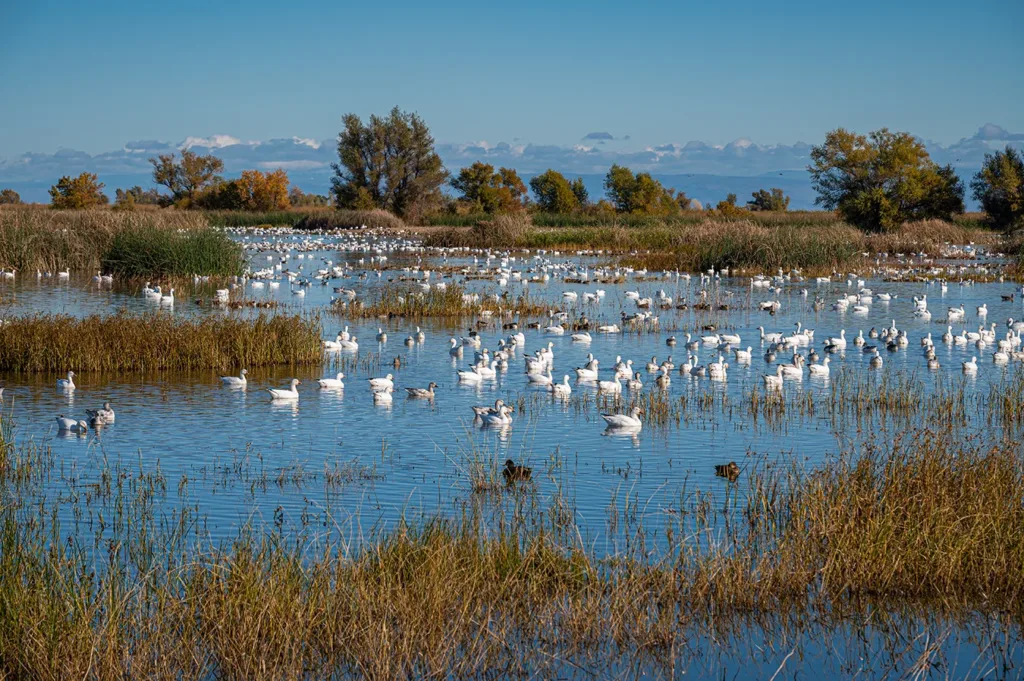
In places where the land meets the ocean, you’ll find one of California’s busiest and most important habitats: coastal wetlands. These are considered transitional zones between dry land and the ocean and can have fresh water, salt water, or a mix of both (called brackish). Common types of California coastal wetland habitats include salt and freshwater marshes, tidal mudflats, estuaries, and coastal lagoons.
California’s coastal wetlands are generally wet, muddy, and grassy environments that are absolutely bursting with life. These vital ecosystems provide critical habitats for diverse species, including some animals that are rare or endangered.
Animals that live in California coastal wetland habitats include:
- Bat Rays
- California Red-Legged Frog
- California Vole (rodent)
- Great Blue Herons
- Harbor Seals
- Ridgway’s Rail (bird)
- River Otter
- Salt Marsh Harvest Mouse
- Snow Geese
- Steelhead Trout
- Western Pond Turtle
- And many more!
Fun Fact: Some migrating birds, like Snow Geese, fly thousands of miles and stop in California wetlands every year to rest and eat during their journey.
Why are Wetlands Important?
California’s coastal wetlands might not look all that glamorous, but they’re one of the most important habitats on Earth:
- Flood Control: They act like natural sponges, soaking up extra rainwater during storms and helping prevent flooding.
- Erosion Control: The dense vegetation protects the shoreline from storm surges, holding the soil in place to prevent erosion.
- Pollutant Filtering: They filter sediments and help clean dirty water before it flows into our streams, rivers, and drinking water supply.
- Animal Habitats: Wetlands provide food and shelter to a wide variety of wildlife, and the ideal environment for baby fish, crabs, birds, and other animals to grow up.
2. California Beaches and Sand Dunes
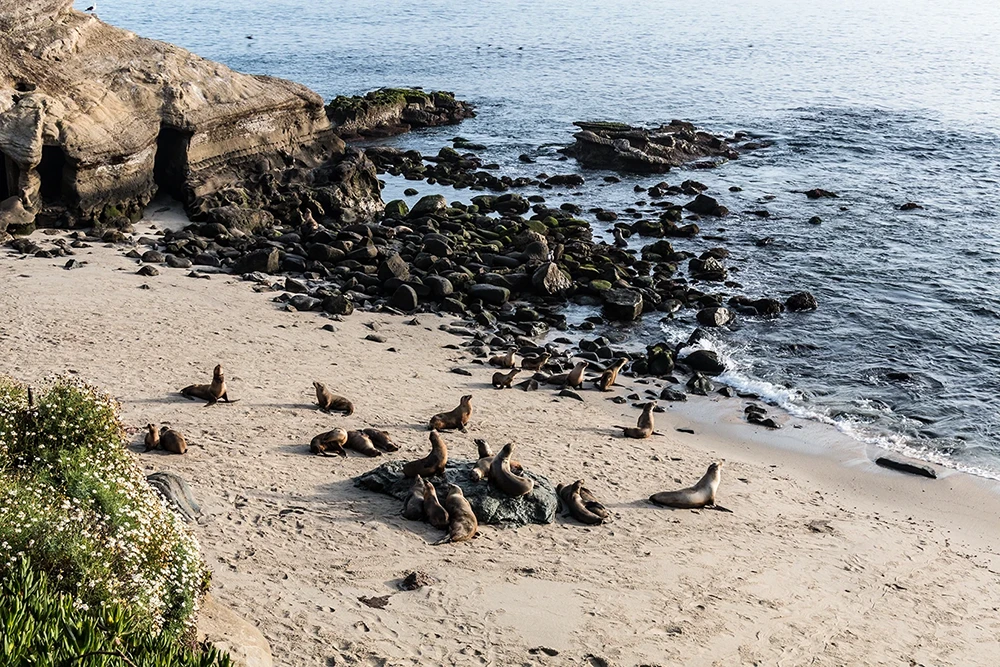
California beaches and sand dunes are some of the most familiar and loved parts of the coastline. They are also living habitats filled with animals and plants specially adapted to constantly shifting sand, salt spray, and strong ocean waves, winds, and tides.
Animals that live on California beaches and sand dunes include:
- Beach/Sand Hoppers
- California Least Tern (bird)
- California Sea Lions
- Elephant Seals
- Ghost Crabs
- Harbor Seals
- Pelicans
- Seagulls
- Sand/Mole Crabs
- Western Snowy Plover (bird)
- And many more!
Every day, waves crash onto the shore, moving sand around, and strong coastal winds blow that sand inland, creating hills of sand called sand dunes. These dunes are held together by hardy plants and succulents like Silver beach-bur, which help trap sand with their roots and slow down coastal erosion.
Why Are Sand Dunes Important?
Without sand dunes or beaches, all the plants, animals, and inland communities would be at great risk:
- Protection from Storms: Sand dunes act like natural barriers, shielding inland areas from strong winds and flooding during storms.
- Sand Reservoirs: Dunes replenish the sand on the beaches, helping combat severe erosion.
- Animal Habitats: Sand dunes provide safe homes for animals, many of which are critically endangered, like the Western Snowy Plover.
- Coastline Stability: The plants that live on sand dunes help keep sand from blowing away, holding the dunes together and stabilizing the coastline.
3. The Intertidal Zone: Rocky Shores and Tide Pools
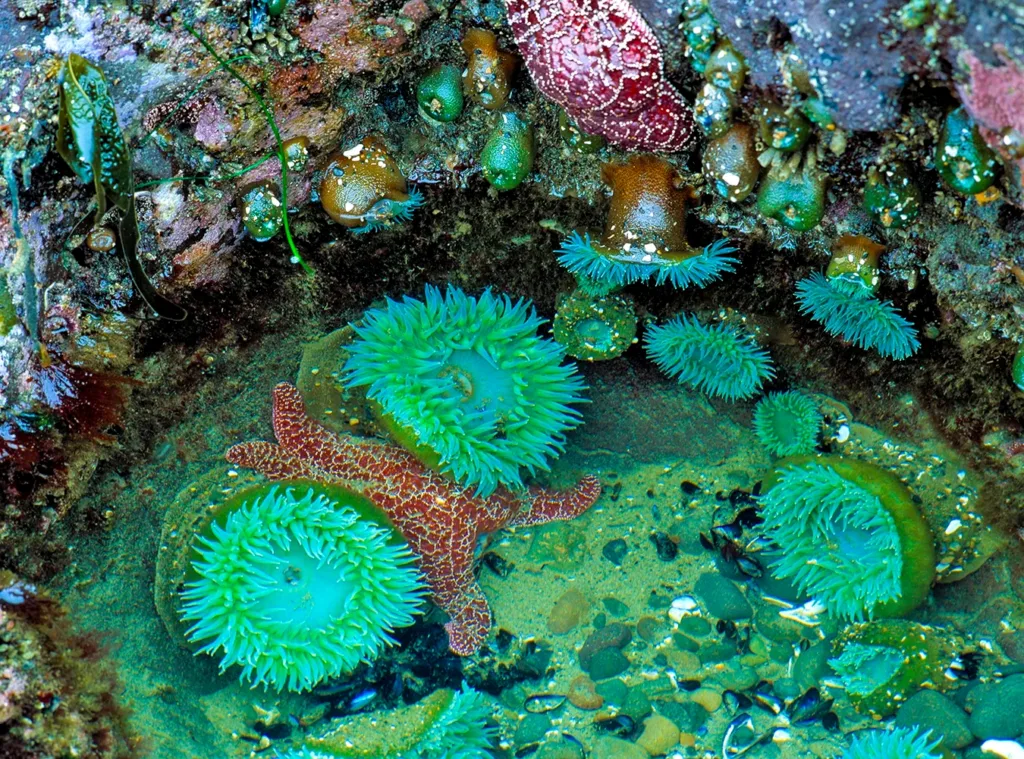
The intertidal zone is the area of the coast that is sometimes covered by water at high tide and exposed at low tide. Along California’s coast, this area is often made up of rocky shores where waves crash and tide pools form.
Tide pools are like tiny ecosystems filled with ocean water, fish, algae, snails, and other small creatures. Marine animals living in the intertidal zone need to survive both underwater and out of water, and endure crashing waves, changing temperatures, and exposure to the sun.
Animals that live in the intertidal zone and tide pools include:
- Black Turban Snails (sea snail)
- Hermit Crabs
- Mussels
- Nudibranchs (colorful sea slug)
- Owl Limpets (sea snail)
- Sea Anemones
- Sea Urchins
- Starfish
- And many more!
Each tide pool can be different, depending on its size, depth, and how long it stays filled with water. At high tide, animals are underwater and can feed and move more freely. At low tide, they must survive exposure to sun, wind, and air while staying moist and protected. The rocky surfaces also provide hiding places and strong surfaces for animals to cling to, so they are not washed away by waves.
Why is the Intertidal Zone Important?
The intertidal zone and tide pools are critical ecosystems that also serve as the perfect living classroom for learning about the ocean:
- Animal Habitats: The intertidal zone provides food and shelter for a wide variety of marine life.
- Marine Nurseries: Tide pools act as aquatic nurseries for baby fish, invertebrates, and crustaceans so they can grow before moving to the open ocean.
- Scientific Study: This zone helps scientists study ocean health, climate change, and marine life evolution.
- Shoreline Protection: The rocky cliffs absorb wave energy and protect more delicate areas of shoreline from storm surges and erosion.
4. Kelp Forests
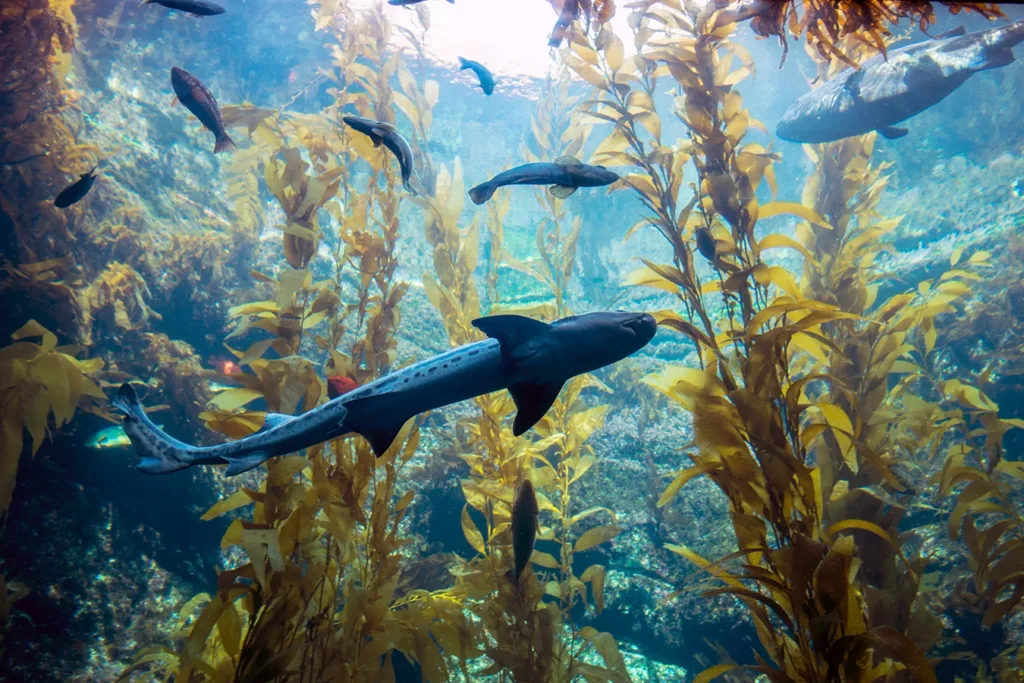
Kelp forests are underwater habitats made up of large, fast-growing seaweeds called kelp. Along California’s coast, these forests grow in cool, shallow ocean waters where sunlight can still reach the seafloor. Some kelp can grow up to two feet per day!
Giant strands of kelp can stretch upward toward the surface, creating towering underwater “forests” that sway with the movement of the ocean. These habitats provide shelter and food for many animals.
Animals that commonly live in California kelp forests include:
- California Sheephead (fish)
- Garibaldi Fish (California State Fish)
- Harbor Seals
- Horn Shark
- Kelp Bass (fish)
- Leopard Sharks
- Rockfish
- Sea Otters
- Wolf Eels
- And many more!
The tall kelp plants form a canopy near the surface, while long fronds and stalks create hiding places throughout the water. Fish, invertebrates, and marine mammals all rely on these underwater forests for food, protection, and shelter.
Why are Kelp Forests Important?
Kelp forests are some of the most productive ecosystems on Earth! They are vital ecosystems that act like underwater rainforests in shallow areas of the oceans:
- Animal Habitats: Kelp forests provide food and shelter for hundreds of marine species, including marine mammals like sea otters and seals, who use the forests to forage for food and rest.
- Shoreline protection: They act as natural breakwaters by absorbing and dissipating ocean wave energy.
- Oxygen Production: As one of the fastest-growing organisms on Earth, kelp absorbs atmospheric carbon dioxide and produces massive amounts of oxygen.
5. The Pelagic Zone: The Open Ocean
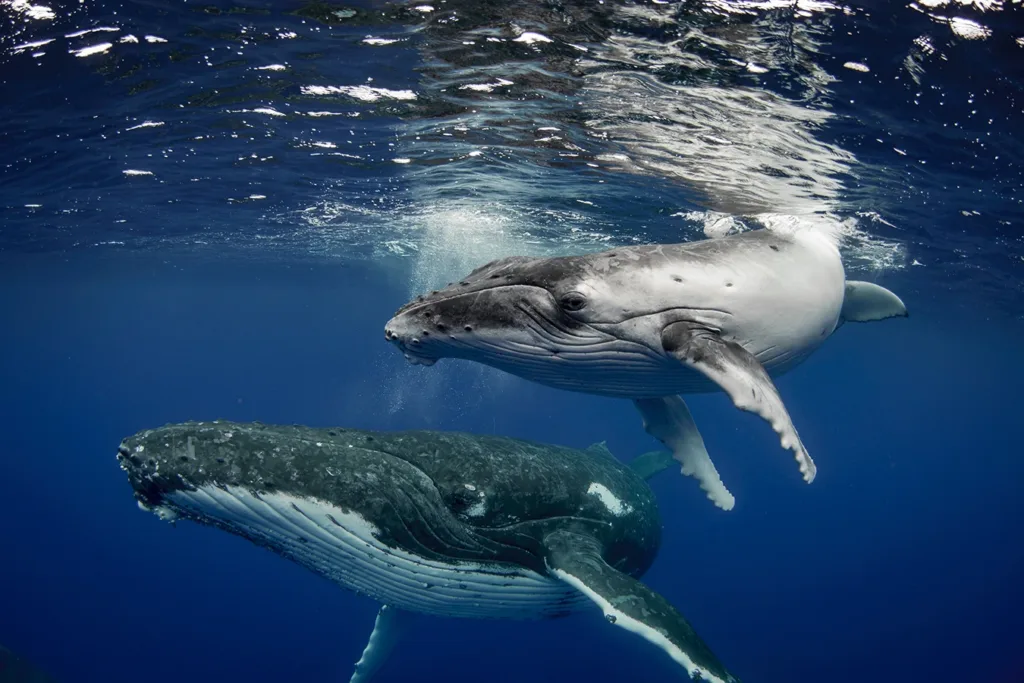
The pelagic zone is the open ocean that stretches far beyond the California coastline and extends from the surface of the water down into deep, dark layers of the sea. Unlike other habitats that are defined by landmarks like rocks or sand, the pelagic zone is mostly open water.
The open ocean can feel like a lonely place, but it is actually buzzing with life! In fact, the largest animals on Earth call the pelagic zone home: blue whales!
Aquatic animals that live in the California Pelagic Zone include:
- Blue Whales
- California Sea Lions
- Dolphins
- Elephant Seals
- Gray Whales
- Great White Sharks
- Humpback Whales
- Green Sea Turtles
- Sperm Whales
- Squid (various species)
- Swordfish
- Tuna (various species)
- And many more!
The open ocean is home to some of the most amazing creatures on the planet. Animals here swim long distances, drift with currents, or survive in deep, low-light conditions. Some species stay near the surface where sunlight supports plankton growth, while others live deeper in cooler, darker waters.
Why is the Pelagic Zone Important?
The open ocean may seem far away from our everyday lives, but it plays a critical role in keeping our entire planet, and everyone on it, healthy:
- Oxygen Production: Tiny organisms that live in the open ocean, called phytoplankton, produce more than half of all the oxygen we breathe.
- Climate Regulation: The Pelagic Zone absorbs huge amounts of heat and carbon dioxide from the atmosphere, helping to regulate the planet’s climate.
- Migration Highway: California’s coast is one of the most important migration routes in the entire world, with gray whales, Pacific salmon, sea turtles, and more, all passing through every year on journeys that can span the entire Pacific Ocean.
6. California Cold-Water Coral Reefs
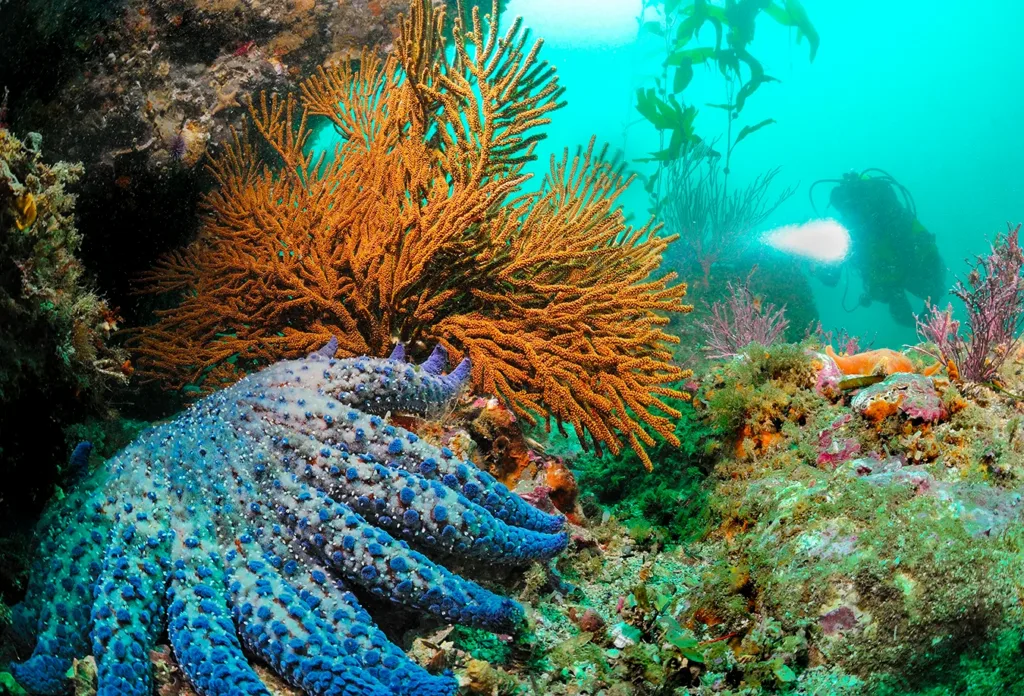
California is home to extensive cold-water coral reef habitats. Unlike the tropical reefs you might picture in warm, sunny seas, California’s coral reefs thrive in the cold, dark depths of the Pacific Ocean. These vibrant and lively environments are often found hundreds or even tens of thousands of feet below the ocean’s surface.
Even without bright light, they still form complex underwater “cities” that support a wide variety of marine life.
Animals that live in California coral reefs include:
- California Hydrocoral (colorful deep-water coral)
- California Moray (eel)
- California Two-Spot Octopus
- Deep-Water Corals
- Nudibranchs (colorful sea slug)
- Red Octopus
- Sea Urchins
- Spot Prawns
- And many more!
California’s cold-water coral reefs grow very slowly, sometimes taking hundreds or even thousands of years to form. They grow in stunning formations and bright bursts of color, creating breathtaking deep-sea landscapes and providing food and shelter for millions of species.
Why are Cold-Water Coral Reefs Important?
California’s cold-water coral reefs are incredibly important to the health of our ocean and our planet:
- Biodiversity: Cold-water coral reefs provide essential shelter and food for a remarkably wide variety of marine organisms.
- Marine Nurseries: Many species of fish, crustaceans, and more all use cold-water reefs as nurseries where their babies can grow safely before venturing out into the open ocean.
- Scientific research: Because cold-water corals grow incredibly slowly, and can live for thousands of years, scientists can study them to learn:
- How the ocean temperatures have changed over time
- Shifts in ocean currents and other environmental conditions
- Changes in ocean water nutrient levels
- And more!
7. Deep Sea Habitats
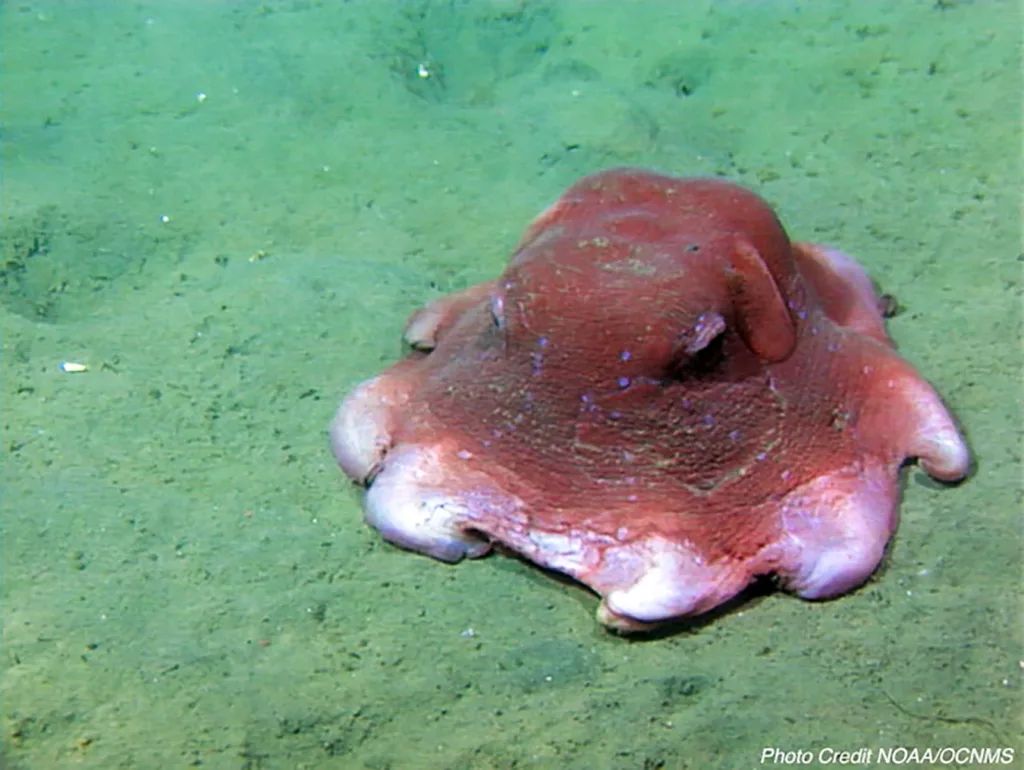
Deep sea habitats are the darkest, deepest parts of the ocean, starting at about 650 feet below the surface and extending all the way to the ocean floor. California’s coastline drops into some of the deepest trenches and underwater canyons in the Pacific Ocean. Down here, sunlight can’t reach, temperatures are very cold, and the pressure from the water above is incredibly strong.
It might sound like a place where nothing could survive, but the deep sea is actually full of strange and fascinating life!
Animals that live in California deep-sea habitats include:
- Anglerfish
- Basket Stars
- Comb Jellyfish
- Giant Isopods
- Humbolt Squids
- Flapjack Octopus
- Pacific Hagfish
- Sea Pigs (sea cucumber)
- Vampire Squid
- And many more!
Many deep-sea animals are specially adapted to survive without sunlight, limited food, and under intense pressure from all the water above. Some have flexible bodies that can handle the weight of the ocean above them, while others can produce their own light to hunt for food in a process called bioluminescence.
Why Are Deep Sea Habitats Important?
To this day, deep-sea habitats are largely unexplored by humans, but they are one of the most vital ecosystems to the survival of Planet Earth:
- Heat Absorption: The deep sea absorbs and stores a large amount of Earth’s heat, helping keep the planet’s temperature more stable.
- Carbon Storage: Deep-sea microorganisms capture and store carbon, which plays a role in regulating Earth’s climate.
- Unique Biodiversity: Many deep-sea creatures are found nowhere else on Earth, making these habitats important for protecting rare and unusual species.
- Medical Research: Organisms in the deep sea produce unique chemical compounds that can help scientists develop new medicines and technologies.
- Scientific Research: Studying how life survives in the deep sea helps scientists understand how organisms might live in other extreme environments on other planets.
Help Us Inspire the Next Generation of Explorers!
At the Children’s Museum of Sonoma County, our interactive exhibits and educational programs are designed to provide hands-on learning opportunities for children of all ages. We believe there is no better way for young minds to fall in love with learning than through play-based discovery!
But we need your help. We have a bold vision for the future of the Children’s Museum and are currently raising funds for a huge expansion project. We want to create a bigger space where even more children can learn, explore, and discover.
Among the new exhibits we have planned for our expansion is Aquatica! This interactive space will be dedicated to exploring the breathtaking world of ocean ecosystems and marine life. From a real saltwater aquarium featuring local marine life to a simulated coral reef and a deep-sea cave exploration experience, Aquatica is designed to nurture future generations of budding marine biologists.
This campaign is large, ambitious, and deeply important. Help us inspire the next generation of scientists, engineers, and inventors. Every gift moves us closer to our goal.
Donate today and help make it happen!