Spanish
What do the Sun, a light bulb, and a firefly all have in common? They all produce light! Light is a form of energy that helps us see the world around us. It comes from natural sources like the Sun, as well as artificial sources like light bulbs. But there’s so much more to light than meets the eye.
In this guide to the science of light for kids, you’ll learn what light is, where it comes from, how it helps us see the world around us, and more!
Amazing Facts About Light for Kids!
Scientists have discovered many incredible facts about how light travels, where it comes from, and the amazing things it can do. Here are some fun facts about light that are sure to blow your mind:
💨 Light is the Fastest Thing in the Universe: Light travels faster than anything else in our known universe, moving at roughly 186,000 miles per second!
☀️ Light from the Sun Takes About 8 Minutes to Reach Earth: Sunlight takes about 8 minutes and 20 seconds to travel through outer space from the Sun to Earth.
🌕 The Moon Doesn’t Make Its Own Light: The Moon looks like it shines bright all on its own, but moonlight is actually reflected light from the Sun.
🐝 Some Animals Can See Light Humans Can’t: Some animals can see certain kinds of light that are invisible to people. For example: Bees can see ultraviolet (UV) light waves, which helps them find flowers.
🪼 Some Animals Can Make Their Own Light: Some animals, like fireflies and certain sea creatures, can make their own light through a chemical reaction in their bodies called bioluminescence.
The Science of Light for Kids: What is Light?
Light is a form of energy that makes it possible for us to see the world around us. Without light, everything would be completely dark, and our eyes wouldn’t be able to see colors, shapes, or movements.
Speaking of movement… Light energy also moves incredibly fast! In fact, light is the fastest thing in the known universe!
💡 For example: Think about what happens when you turn on a light switch. The room doesn’t slowly fill up with light. Light moves so fast that the instant you click the switch, the whole room is filled with bright light!
Scientists have spent centuries studying this fascinating form of energy, learning how light is created, where it comes from, how it helps us see, and so much more. Read on to learn more about the amazing science of light!
What is Light Made Of?
Light is made of tiny clusters of energy called photons (pronounced FOH-tons). These invisible particles are too small to see on their own, but when billions of photons cluster together, they create the light you see all around you every day.
Photons also don’t have any mass, which means they weigh absolutely nothing. That’s why light can travel so fast!
Where Does Light Come From?
Light comes from many different sources. Scientists organize them into two main groups: natural light sources and artificial light sources.
Natural light sources are found in nature:
- The Sun: The biggest and brightest natural light source for Earth.
- Stars: Every star in the night sky makes its own light, just like the Sun.
- Fire: Campfires, fireplaces, even lava from volcanoes all produce natural light as they release heat energy.
- Lightning: A giant spark of electricity that creates a bright flash of light during thunderstorms.
Artificial light sources are made by people:
- Light Bulbs: One of the most common artificial light sources used in things like lamps, night lights, flashlights, and streetlights to illuminate dark places.
- Digital Screens: Phone, computer, and TV screens are made of millions of tiny dots of light called pixels that glow, so you can see pictures and videos.
- Lasers: A super-focused, straight beam of light that can be used in science, medicine, construction, entertainment, and more!
Most of the light we see during the day comes from the Sun, meaning it’s natural light. During the daytime, sunlight brightens the Earth, allowing us to see everything around us. At night, we use artificial lights like lamps and streetlights so we can still see everything around us after the Sun goes down.
Why is Light Important?
Light is one of the most important forms of energy on Earth—and beyond. From allowing us to see colors and shapes to helping plants grow and powering technology, light plays a huge role in almost everything we see and do every day.
Below, we take a closer look at how important light is for people, plants, animals, technology, doctors, and scientists:
Light Helps Us See
Have you ever tried to find something in a dark room? It’s almost impossible! Even if it’s sitting right in front of you, your eyes need light to see it.
Here is how light helps us see:
- Light Comes from a Source: Light comes from a source, like the Sun or a lightbulb, and travels until it runs into something.
- Light Bounces Off Surfaces: When the light runs into any object like a toy, book, or tree, it bounces (or reflects) off the surface of it.
- Your Eyes See the Light: When light bounces off objects, it enters your eyes through your pupils, which are the black circles that we all have in the middle of our eyes.
- Your Brain Creates the Picture: Your brain uses that light to recognize shapes, sizes, colors, and objects, so you know what you are looking at.
Light helps our eyes see everything around us. When light shines on an object, we are able to see the object because of the light bouncing off of it. Without light, our eyes would have nothing to detect, and the world around us would appear completely dark!
Light Helps Us See Color
Why does a strawberry look red and grass look green? Because of light! Lots of people think that light is white, or even colorless, but it’s actually made up of all the colors of the rainbow mixed together.
When light hits an object, the object absorbs some of the colors of light while the other colors bounce off it (or reflect off of it). The colors that bounce off the surface of the object are the colors you see.
For example:
- A Black T-Shirt: Absorbs almost ALL the colors of light, so very little color bounces back to your eyes, making the shirt look dark black.
- A White T-Shirt: Absorbs almost NO colors of light, so almost all the colors are reflected back to your eyes, making the shirt look bright white.
- Red Strawberries: Absorb almost all the colors of light EXCEPT the red light, so the strawberry looks red.
- Green Grass: Absorbs almost all the colors of light EXCEPT green, so the grass looks green.
The colors you see all around you depend entirely on light. Everything gets its unique color by absorbing some colors of light and reflecting the color you see!
Light Helps Plants Grow
Plants need light from the sun to grow tall and strong, just like we need to eat food and drink water every day. Plants use sunlight to make their own food through a process called photosynthesis (pronounced fo-toe-sin-thuh-sis). This food gives plants the energy they need to grow strong, make flowers, and produce fruits and vegetables that we eat.
Here is how light from the Sun helps plants grow:
- Plants Capture Sunlight: Plants capture light from the Sun through their leaves and store it.
- Plants Make Their Own Food (Photosynthesis): Plants use the stored sunlight, along with water and other natural elements from the air, to make their own food, so they can grow.
- Plants Release Oxygen: As plants turn light into food, they also release oxygen into the atmosphere, giving us clean air to breathe.
Without light, most plants couldn’t survive on Earth, and neither could most animals or people who depend on plants for food!
Light Helps Animals in Many Unique Ways
Animals use light in amazing ways for things like finding food, talking to their friends, hiding from danger, and more!
Here’s how different animals use light in different ways:
- Bees See UV Light: Bees can see ultraviolet (UV) light to help them find flowers and nectar.
- Owls Can See in the Dark: Owls have very big eyes that help them see in almost complete darkness.
- Fireflies Make Their Own Light: Fireflies make their own light to talk to other fireflies. This light is called bioluminescence (pronounced BY-oh-LOO-me-NES-uns).
- Squids Glow to Hide from Danger: Certain types of squid can make their bellies glow to help them hide from predators.
Every animal uses light a little differently, but each amazing adaptation helps them survive in their own unique habitat.
Sunlight Provides Heat and Energy for the Earth
The Sun is Earth’s biggest source of light and heat. Sunlight is a form of energy that affects weather patterns, warms our planet, and can even be turned into electricity.
Here are a few amazing ways that sunlight provides heat and energy for all living things on planet Earth:
- Keeping Earth Warm: Sunlight warms the land, oceans, rivers, and air, keeping the planet at temperatures where life can thrive.
- Powering Weather Patterns: Sunlight heats up water in oceans and lakes, causing it to evaporate and float up into the sky to make clouds, and later fall back down as rain.
- Creating Solar Energy: Scientists have found ways to capture and store the Sun’s energy using solar panels, and turn it into electricity to power our homes, schools, and neighborhoods.
Without the Sun’s light and energy, Earth would be completely dark and frozen, so we wouldn’t be able to live here.
Light Makes Modern Technology Possible
Without light, many of the devices and technology you use every day wouldn’t work. Scientists and engineers have found clever ways to use light to send information, create pictures and videos, and power electronics.
Here are some amazing examples of how light makes modern technology possible:
- Digital Screens: TVs, tablets, computers, and phones use millions of tiny red, green, and blue lights called pixels to create every picture, video, and game you see.
- The Internet Uses Light: The internet relies on laser light sent through special cables called fiber-optic cables to send messages, videos, and games around the world.
- Picture and Video Cameras: Light enters a camera through a lens and captures pictures and videos.
- Laser Light: Lasers are special beams of light that can scan barcodes at stores, help make products in factories, play movies and music on DVDs and CDs, and so much more!
Light is an amazing tool that helps make electronics, devices, and even the internet faster and more efficient. Without light, much of the technology we use every day wouldn’t exist.
Light Helps Doctors Care for People
Doctors use light in many ways to keep people healthy. Different kinds of light can help them look inside the body, perform treatments, and even find problems early.
Here are some examples of how doctors use light to care for people:
- Exam Lights: Doctors use strong lights to check your eyes, ears, throat, and skin.
- X-Rays: X-rays are a special kind of invisible light that helps doctors see bones inside your body with no pain at all.
- Microscopes: A microscope shines light through tiny objects and makes them look much bigger.
Doctors use light in many amazing ways every single day! Light helps them learn what’s happening inside the body so they can provide the best care possible.
Light Helps Scientists Explore Space
Have you ever wondered how scientists can learn about stars and planets even when they are millions of miles away from Earth? Most distant stars, planets, and galaxies are too far away for us to travel to. But scientists can study the light that comes from outer space to learn all about them!
Here are some incredible ways scientists use light to learn about outer space:
- Seeing Faraway Objects in Space: Telescopes help us see light from faraway stars, planets, and galaxies. Some light has to travel for millions and even billions of years before scientists can see it using the most powerful telescopes on Earth.
- Exploring Invisible Light: Space telescopes can also help scientists see infrared, ultraviolet, and other types of light that human eyes can’t see on their own.
- Learning About Stars: The color and brightness of light from a star can help scientists learn how hot it is, what the star is made of, and how far away it is from Earth.
- Finding New Planets: When scientists study stars, sometimes they see tiny changes in a star’s light that can reveal new planets orbiting nearby.
Every time scientists study light from space, they uncover new clues about our amazing universe!
Help Us Inspire the Next Generation of Scientists!
At the Children’s Museum of Sonoma County, our interactive exhibits and educational programs are designed to provide hands-on learning opportunities for children of all ages. We believe there is no better way for young minds to fall in love with learning than through play-based discovery!
But we need your help. We have a bold vision for the future of the Children’s Museum and are currently raising funds for a major expansion project that will create space for more children to learn, imagine, and explore.
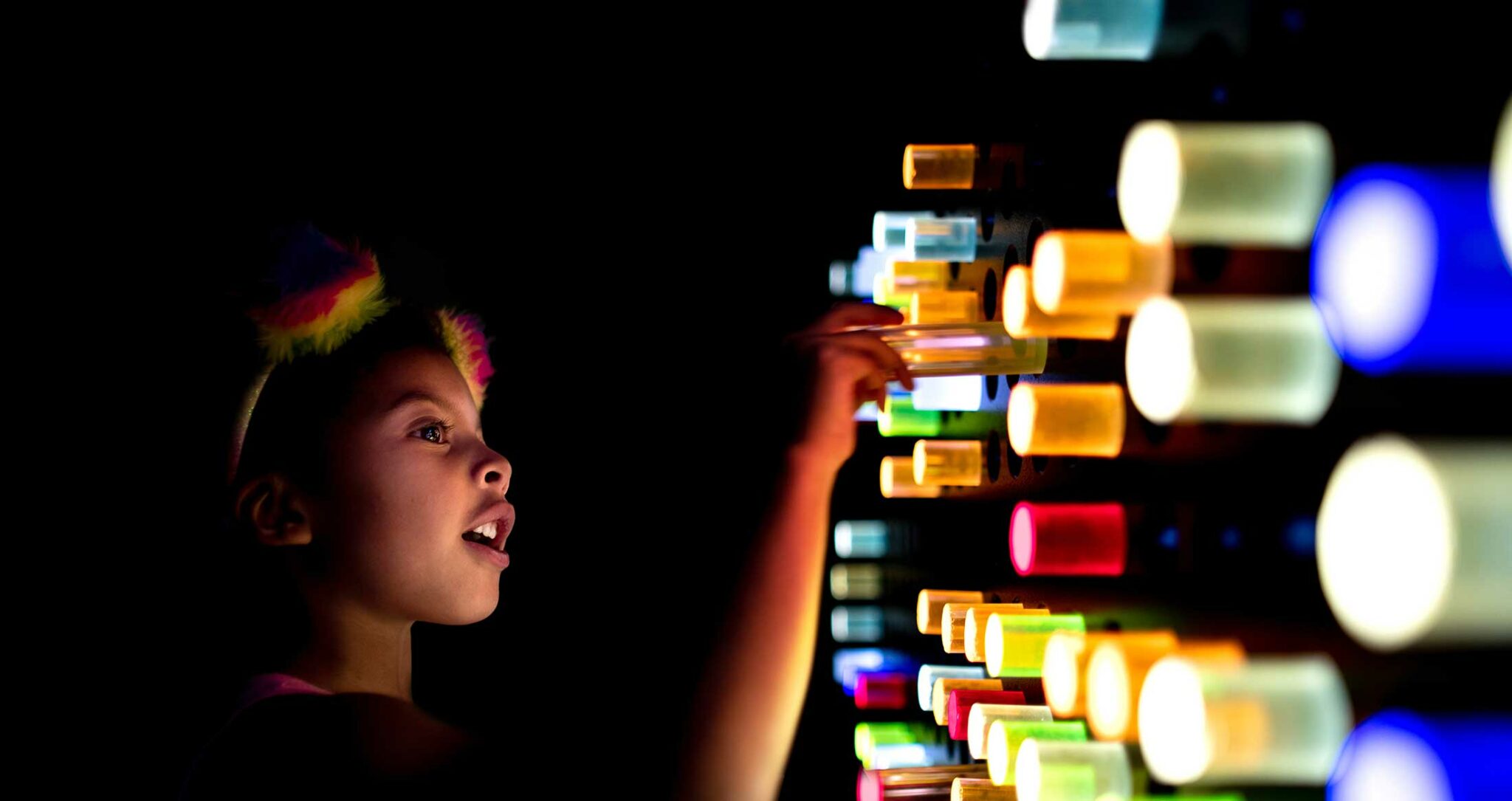
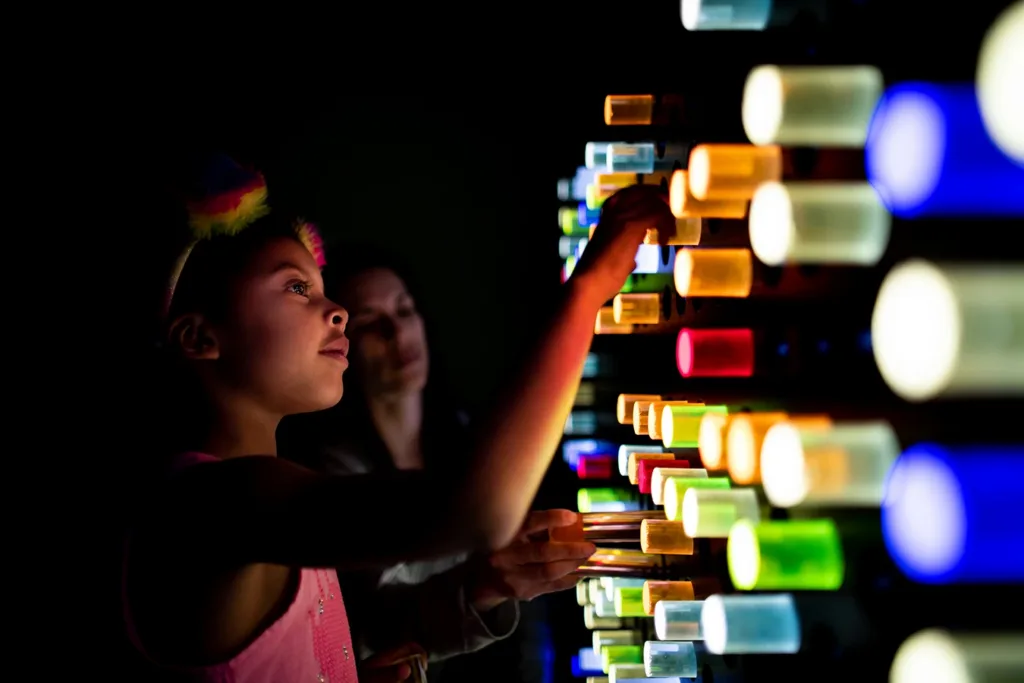
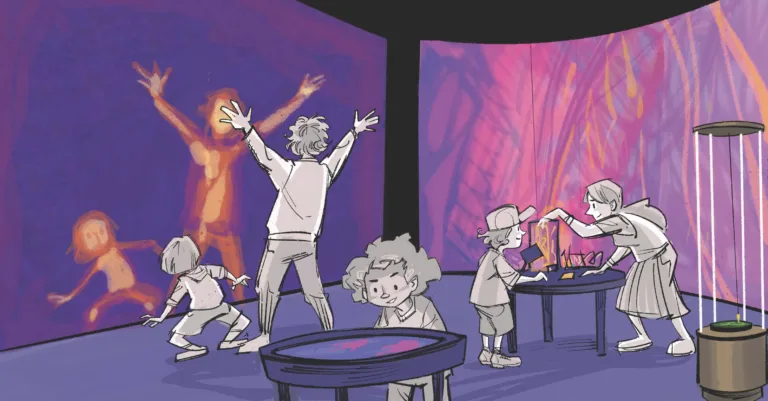
One of the exciting new exhibits we have planned for our expansion is Luminaria—an interactive space dedicated to exploring the science of light! Luminaria will invite children to discover how light works through colorful and engaging experiments. They’ll create dazzling light patterns, explore invisible infrared heat, and see how light travels, changes, and shapes the world around us!
With your support, Luminaria and many other exhibits can become a reality. Every donation helps inspire the next generation of scientists, engineers, inventors, and problem solvers.