Spanish

Sensory play turns everyday moments into opportunities for toddlers to build important developmental skills in a fun and engaging way. From crunchy leaves to cozy spices, the fall season is filled with tons of beautiful sights, sounds, smells, and textures that naturally invite little learners to explore the world around them.
In this post, we explain what sensory play is, why it’s so important for early childhood development, and list some fun, fall-themed sensory activities for toddlers!
What is Sensory Play?
Sensory play is any activity that stimulates a child’s senses: sight, sound, smell, touch, and taste. It also helps engage their sense of movement, balance, and overall body awareness. For toddlers, it’s one of the most natural and important ways to learn about the world around them.
Fun activities that naturally stimulate a child’s senses can help them develop positive connections to new and different sensory information. This can encourage curiosity, exploration, and confidence as they encounter new experiences in a fun and safe way.
What Are the Benefits of Sensory Play for Toddlers?
Sensory play supports a wide range of developmental skills during early childhood. Because it engages the senses and encourages hands-on exploration, it naturally builds the foundation for more complex life skills.
Key benefits of sensory play for toddlers include:
Together, these benefits make sensory play a powerful tool in early childhood development, helping toddlers build essential life skills in a fun and natural way.
Fall-Themed Sensory Activities for Toddlers
The sensory play ideas listed below are designed to be easy to set up, safe for little hands, and adaptable for different stages of learning. Each activity encourages open-ended play, allowing toddlers to engage at their own pace as they explore different textures, colors, sounds, and scents of the fall season!
1. Fall-Theme Sensory Bin Ideas
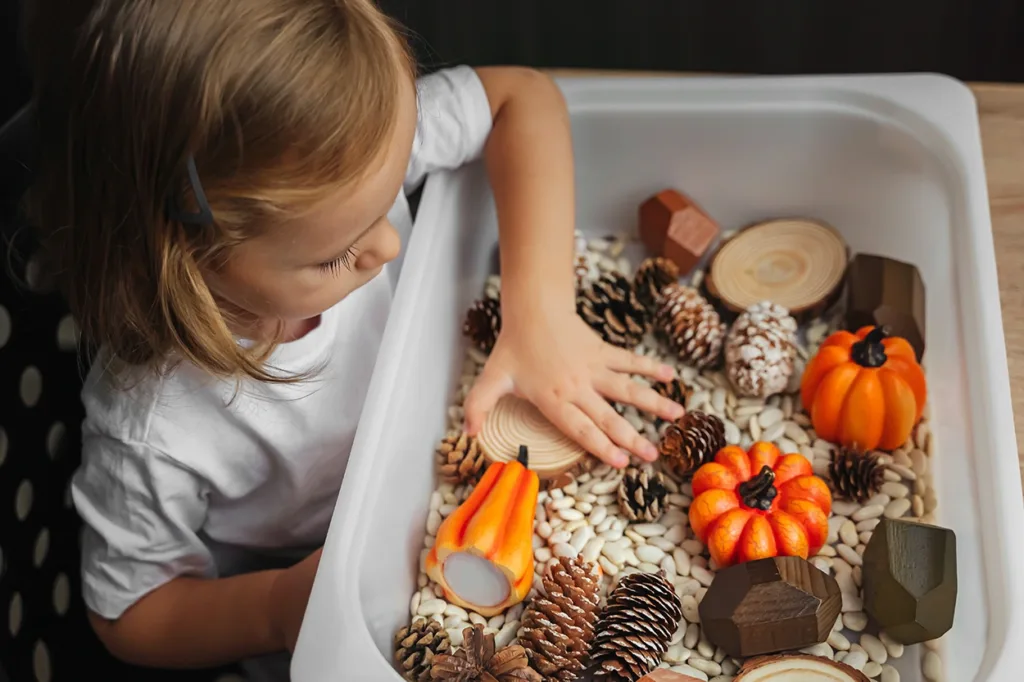
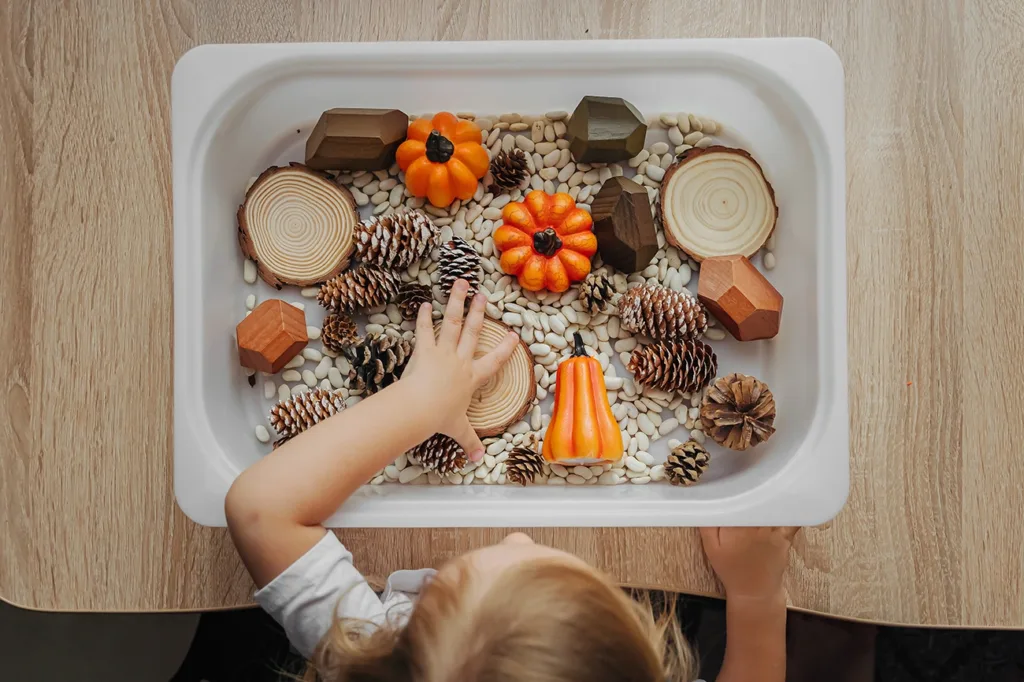
Sensory bins are one of the easiest and most engaging ways for toddlers to explore the colors and textures of the fall season! The materials listed below are simply suggestions. You can mix and match items based on your toddler’s age, interests, and needs. No matter what you include, sensory bins are an open-ended activity that encourages hands-on learning through touch, sound, sight, and imaginative play.
Suggestions for Fall-Themed Sensory Bins:
- Large plastic container
- Scoops, tongs, cups, and small bowls
- Dry Base: Dried corn kernels, dried beans, uncooked rice, or shredded paper
- Fall-Themed Items: Mini pumpkins or gourds, pinecones, leaves (real or faux), large acorns, cinnamon sticks
How to Make a Fall-Themed Sensory Bin:
- Fill the bin with your chosen base material and mix in all your fall-themed items.
- Place scoops, cups, and other tools nearby to encourage pouring, transferring, and grasping.
- Let your little one dig, pour, and explore freely!
- It can be helpful to demonstrate how to use tools like tongs to pick things up, cups for scoops, small bowls for sorting, etc.
Benefits of Sensory Bins for Toddlers
Sensory bins help toddlers build fine motor skills as they scoop, pour, and manipulate different objects. It also promotes early cognitive skills like sorting, comparing, and categorizing. Because the setup is so flexible, children can explore and play at their own pace, making it a great activity for multiple ages and stages.
2. Fall Smelling Jars

Fall-themed smelling jars are a simple, hands-on way for toddlers to explore all the cozy smells of the season. This activity encourages curiosity, comparison, descriptive language skills, and playful critical thinking as little ones guess and rank the different scents.
What You’ll Need to Make Fall Smelling Jars:
- Small jars or containers with secure lids
- Construction paper and tape (if jars are clear)
- Cotton balls, if using essential oils and/or liquid extracts
- Fall Scent Ideas:
- Herbs: Sage, Rosemary, Thyme
- Spices: Cinnamon, Nutmeg, Vanilla
- Fruits: Apples, Lemons, Coffee Beans
How to Make Fall Smelling Jars:
- If you are using essential oils or liquid extracts: Put 2 to 3 drops on a cotton ball and put the cotton ball in the jar with the lid on.
- If you are using physical spices, herbs, or fruit: Fill the empty jars at least a quarter of the way and put the lids on.
- If the jars are clear: Fold or cut construction paper into strips and tape it to the outside of each container, so you can no longer see what is inside.
- Place all jars in a basket or tray and invite your toddler to smell, shake, and compare them.
- Encourage them to guess the scents, rank their favorites, and describe each one using words like “sweet,” “spicy,” or “strong.”
Benefits of Smelling Jars for Toddlers
Smelling jars help toddlers strengthen their sense of smell and build early descriptive language skills as they learn to describe and compare scents. By guessing and comparing scents, children also build cognitive skills like memory, categorization, and association.
3. Fall Sensory Painting Activities
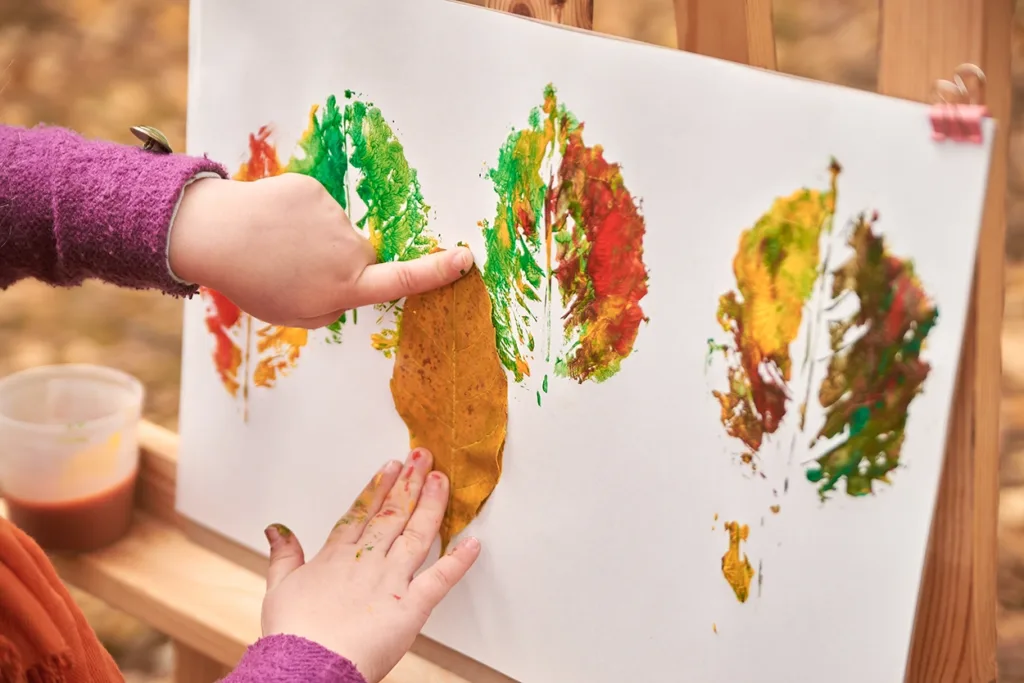
Sensory painting engages multiple senses through different textures, smells, sounds, and more. From painting with leaves to stamping with apples, fall sensory painting is a creative way for toddlers to engage multiple senses and build cognitive and motor skills all at the same time.
Suggestions for Fall Sensory Painting:
- Washable paint in fall colors (orange, red, yellow, brown)
- Paper or cardstock
- Paint brushes or sponges
- Shallow paint trays or paper plates
- Fall-Themed Items:
- Leaves (real or faux)
- Small pumpkins or gourds (for rolling or stamping)
- Apple halves or corn cobs (for rolling or stamping)
How to Set Up Sensory Painting Activities:
- Prepare a painting area and put out the paper/card stock, paint brushes/sponges, and pour small amounts of paint into shallow trays.
- Set out fall items to be used as alternative paint tools:
- Painting with leaves or using them as a stamp
- Using small pumpkins as a canvas
- Using apple halves for stamps
- Using corn cobs as rolling stamps
- Encourage your toddler to dip the items in paint and explore how each one makes different shapes, lines, and textures.
- Let them switch between tools or use their hands.
- Once they are done, you can let the artwork dry and put it out on display for the season!
Benefits of Sensory Painting Activities for Toddlers
Sensory painting activities support fine motor development as toddlers grasp, press, roll, and explore different tools. They also promote creativity and cognitive development as children experiment with making different shapes, patterns, and color combinations.
4. Autumnal Outdoor Scavenger Hunt
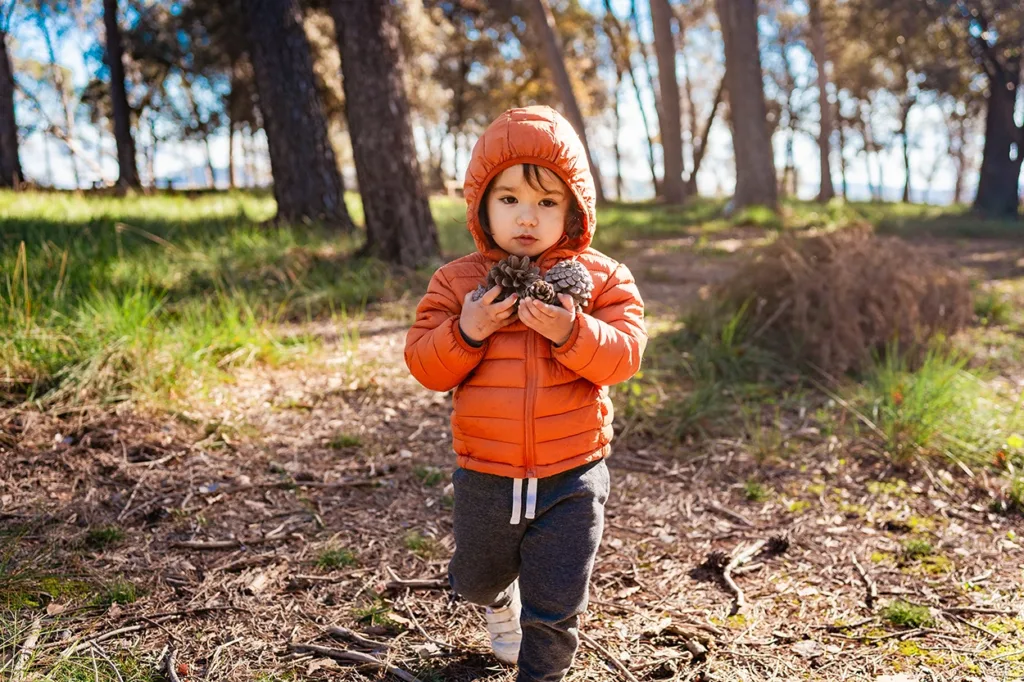
Outdoor scavenger hunts turn simple nature walks into a rich sensory adventure for little learners! Toddlers can explore the colors, sounds, and textures of the fall season while collecting natural treasures along the way. This activity is easy to adapt to your local environment, and your “scavenger list” can be as simple or detailed as you’d like.
Things to Bring on an Outdoor Scavenger Hunt:
- Small basket, bucket, or tote bag
- Scavenger hunt list
- Optional: clipboard and crayon for checking off items
How to Create a Fall-Themed Outdoor Scavenger Hunt:
- Choose a location: Choose a safe, toddler-friendly outdoor spot to walk around, like your neighborhood, a local park, a nature trail, or even your backyard.
- Make a scavenger hunt list: Create a list of fall-themed items to find, like:
- Acorns
- Pinecones
- Big red leaves
- Small yellow leaves
- Large rocky boulders
- Smooth grey pebbles
- Animals like squirrels or crows
- Start the hunt: Go to your chosen location and start walking around, looking for items on the list.
- Let them take the lead: Let your little one be in charge of holding the basket or bag to collect items they find, and also checking off the list of the things they see.
- Take it slow: Encourage your child to observe their surroundings by looking closely, touching gently, and listening to the sounds happening around them.
- Talk about the experience: Once the scavenger hunt is over, talk about the items you found, what you saw a lot of, or what you weren’t able to find this time, and what their favorite part of the walk was.
Benefits of Outdoor Scavenger Hunts for Toddlers
An outdoor scavenger hunt supports sensory exploration through touch, sight, and sound. These outdoor adventures also encourage toddlers to slow down and observe the world around them. This, in turn, naturally promotes language development as they name and describe what they see and find along the way. Plus, physical movement supports gross motor development, and fun outdoor activities can help little ones feel more connected to nature.
Find More Resources at the Children’s Museum of Sonoma County
At the Children’s Museum of Sonoma County, we understand the importance of playtime for little learners. We invite you to explore our PLAYology Playbook blog for more articles and insights on early childhood development. Or visit the Children’s Museum and see firsthand how play can help children grow, learn, and thrive!
Our TOTopia exhibit area is specifically designed for infants and toddlers, featuring engaging activities that focus on sensory exploration and motor skill development. And stop by our Family Resource Center to find free information and resources for families with young children.
Sign up for our newsletter to be the first to learn about the latest news, happenings, and offerings at the Children’s Museum of Sonoma County!